

Creating a beautiful home shouldn’t come at the planet’s expense. Sustainable interior design is about making thoughtful choices — in materials, furniture, and overall approach — that minimise environmental impact while enhancing the character of your space. Whether you’re planning a complete home renovation or simply updating a room, this guide offers practical, stylish steps to design with sustainability in mind.
What Is Sustainable Interior Design?
At its core, sustainable interior design focuses on reducing waste, choosing eco-friendly materials, and prioritising longevity over fast trends. It’s not just about being “green” — it’s about creating interiors that are healthier for both people and the planet.
Key principles include:
-
Use of natural or recycled materials
-
Energy-efficient lighting and appliances
-
Low-VOC paints and finishes
-
Furniture that’s built to last or repurposed
-
Mindful sourcing and ethical production
1. Choose Timeless Over Trendy
Sustainability starts with longevity. Rather than chasing every seasonal trend, focus on classic shapes, versatile palettes, and well-made furniture that won’t need replacing every few years. Consider design styles such as Scandinavian, Modern Rustic, or Mid-Century, all of which lend themselves well to sustainable living due to their simplicity and durability.
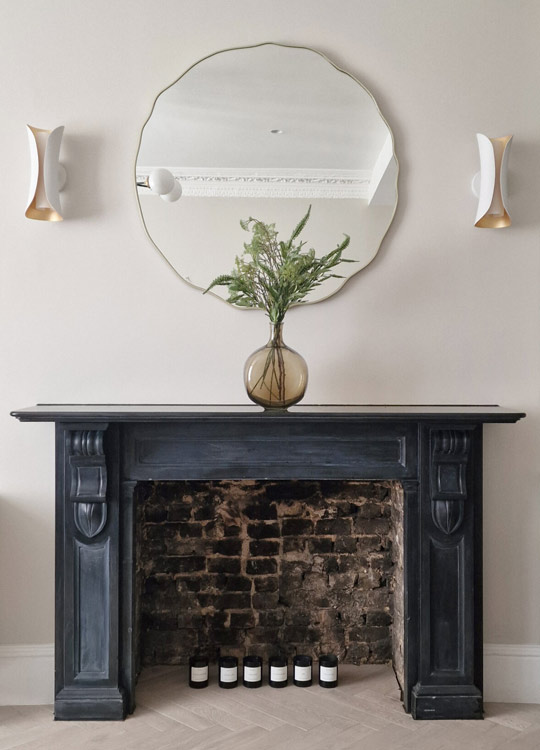
In our Grade II Listed Paddington Flat we restored the fireplace to it’s original form. The result is not only stunning but also provides a timeless aesthetic and adds character to the property.
Did you know?
VOCs (Volatile Organic Compounds) found in some paints can linger in your air for months. Low-VOC or VOC-free paints are better for your home and health, especially in children’s bedrooms or small flats.
2. Embrace Natural and Recycled Materials
Prioritise materials with a low environmental footprint:
-
Bamboo: A fast-growing, renewable material ideal for flooring and furniture.
-
Cork: Biodegradable, naturally antimicrobial, and great for floors or accessories.
-
Reclaimed wood: Full of character, reclaimed timber reduces the demand for virgin materials.
-
Recycled textiles: Look for rugs and upholstery made from recycled cotton or PET bottles.
These materials are not only eco-friendly but often add warmth and texture to interiors, a key component of good design.
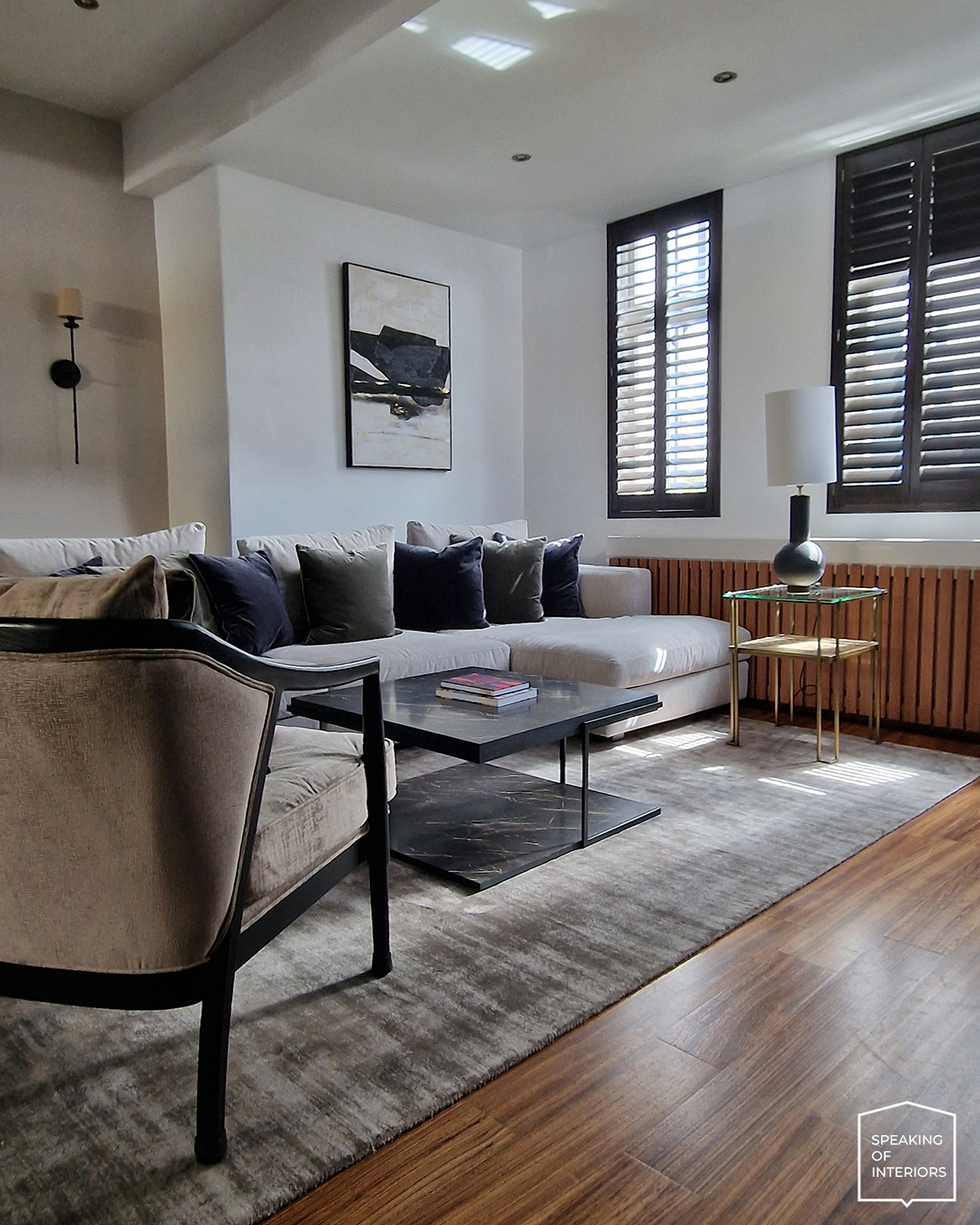
In our Contemporary London Flat (view more), we kept the original wood flooring and created a scheme around it to embrace sustainability.
3. Buy Vintage or Upcycle
One of the most sustainable things you can do? Use what already exists. Vintage furniture, lighting, and decorative pieces have already passed the test of time. They add charm and often come with a story. If something needs a bit of love, consider upcycling with a coat of eco-friendly paint or reupholstering with sustainable fabric.
For styling tips, see our post on 5 Unexpected Interior Design Styles That Will Transform Your Home.
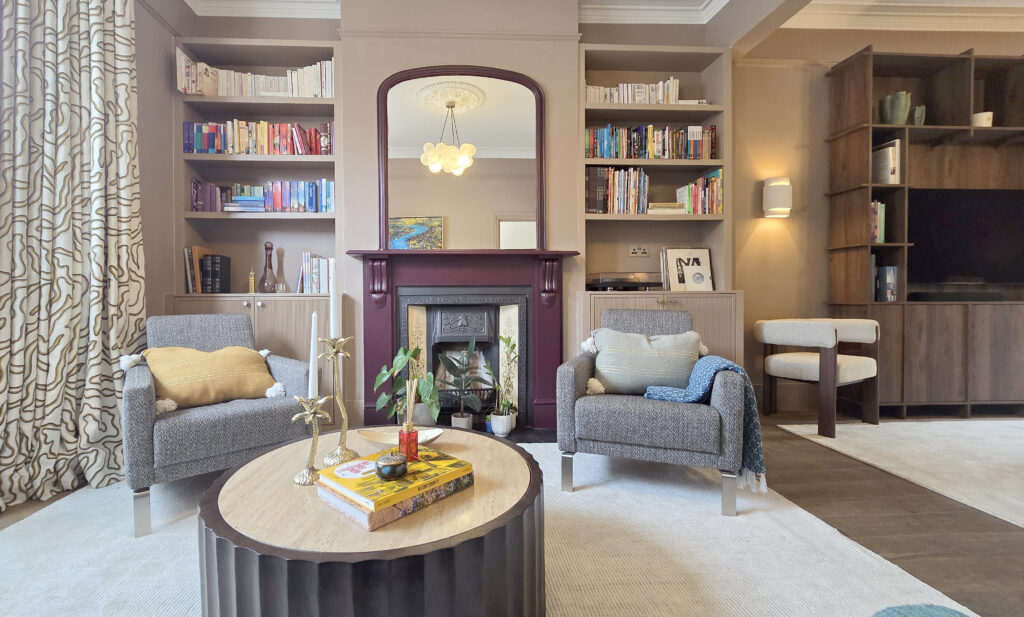
In our Battersea Family Home project (see more), we worked closely with the client to include their existing pieces of furniture – such as these grey armchairs, with the new scheme we created for them, including joinery and a complimentary furniture pieces like the coffee table.
4. Choose Low-Impact Paints and Finishes
Traditional paints often contain VOCs (volatile organic compounds), which release harmful chemicals into the air. For a healthier home:
-
Opt for low-VOC or VOC-free paints
-
Avoid synthetic finishes where possible
-
Use natural oils or waxes on wood
These choices help improve indoor air quality while keeping your home looking beautiful.
5. Support Local and Ethical Brands
Reduce your carbon footprint by sourcing materials and products from local artisans or British-based furniture makers. Not only does this cut down on emissions from long-distance shipping, but it also supports small-scale, ethical production practices.
Look for certifications like FSC (Forest Stewardship Council) for wood and GOTS (Global Organic Textile Standard) for fabrics.
6. Let Nature In
Incorporating plants is a beautiful way to make your interiors feel alive while boosting air quality. Choose easy-care indoor plants like peace lilies, snake plants, or ferns to introduce greenery into your space.
Looking for ideas? Don’t miss our upcoming post on How to Decorate with Indoor Plants (coming soon).
7. Design with Energy Efficiency in Mind
Sustainable interiors aren’t just about materials — it’s also about how your space functions. Here’s how to improve efficiency:
-
Switch to LED bulbs and energy-efficient appliances
-
Maximise natural light with well-placed mirrors and reflective surfaces
-
Use thermal curtains and rugs to retain heat in winter
Need more inspiration? See our tips on Maximising Natural Light in Your Home (post coming soon).
Sustainable Design in Small Spaces
Sustainable design isn’t just for large homes or whole-property renovations, in fact, small spaces often benefit the most from eco-conscious thinking.
Whether you’re decorating a compact flat or rethinking a single room, here are some simple ways to incorporate sustainability:
-
Choose compact, multi-functional furniture made from FSC-certified wood or recycled materials
-
Layer natural fibre rugs (like jute or wool) to insulate floors and add visual warmth
-
Opt for built-in or wall-mounted joinery to reduce the need for bulky freestanding pieces
-
Use mirrors strategically to reflect natural light and reduce dependence on artificial lighting
-
Switch to LED lighting and consider dimmer switches for both mood and energy savings
In one of our recent London flat projects, we transformed a tight living-dining area using a mix of vintage finds, open shelving made from reclaimed timber, and airy linen curtains to frame the light. With a bit of creativity, even the smallest footprint can reflect big sustainable thinking.
Think Energy and Sustainability
Sustainable design isn’t just about choosing natural materials; it’s also about how your home functions. Energy-efficient upgrades not only reduce your environmental impact but also make long-term financial sense.
Consider integrating solutions like solar panels, green roofs, or air-source heat pumps to reduce reliance on fossil fuels. If you’re planning a renovation, improved insulation and energy-efficient glazing are low-visibility changes that make a big impact.
For those working remotely, garden studios or converted sheds with proper insulation and heating offer an innovative, sustainable way to create extra space without extending your home’s footprint.
Your Journey to a More Sustainable Space
Sustainable interior design isn’t a restriction; it’s a creative opportunity. By choosing quality over quantity, embracing natural textures, and designing with purpose, you’ll create a space that feels grounded, healthy, and truly yours.
If you’re considering a home redesign and want to incorporate sustainable choices, our Residential Interior Design Services can help you make mindful decisions that align with your style and values.
Speaking of Interiors
Interior Designers, London
Not Sure Where to Start?
Whether you’re after expert guidance or just a quick professional opinion, our Online Interior Design service is a simple, sustainable way to begin your design journey.