

Small homes don’t need less, they need smarter. The right storage turns tight rooms into calm, hard-working spaces without sacrificing style. Below you’ll find an interior designer’s guide to planning clever small space storage: what to build in, what to buy ready-made, and how to make every centimetre earn its keep.
Start with a storage plan (before you buy a single box)
A great scheme begins with an audit:
- Zone by frequency: daily (within arm’s reach), weekly (higher/lower shelves), occasional (very high/under-bed).
- Measure the “golden zone”: 500–1,500 mm from the floor is prime, easy-access storage.
- Right thing, right place: coats at the door, paperwork near the desk, linens close to bedrooms.
- Contain categories: one home for each category (e.g., “spare toiletries” live in a single basket in the bathroom cupboard).
Clearances to remember
- Internal walkway: 800–900 mm
- Standard wardrobe depth: 600 mm (shallow folded-storage units can be 350–450 mm)
- Book/utility shelves: 260–320 mm
- Pull-out drawers: allow 450–500 mm front clearance
Built-in joinery that transforms tight spaces
Bespoke storage makes awkward corners work beautifully.
1) Alcoves & chimney breasts
- Fill alcoves with full-height cabinetry and adjustable shelves.
- Add base cupboards with doors (for visual calm) and open shelves above (for display).
- Run a single top across both sides for a unified look.
2) Under-stairs to the millimetre
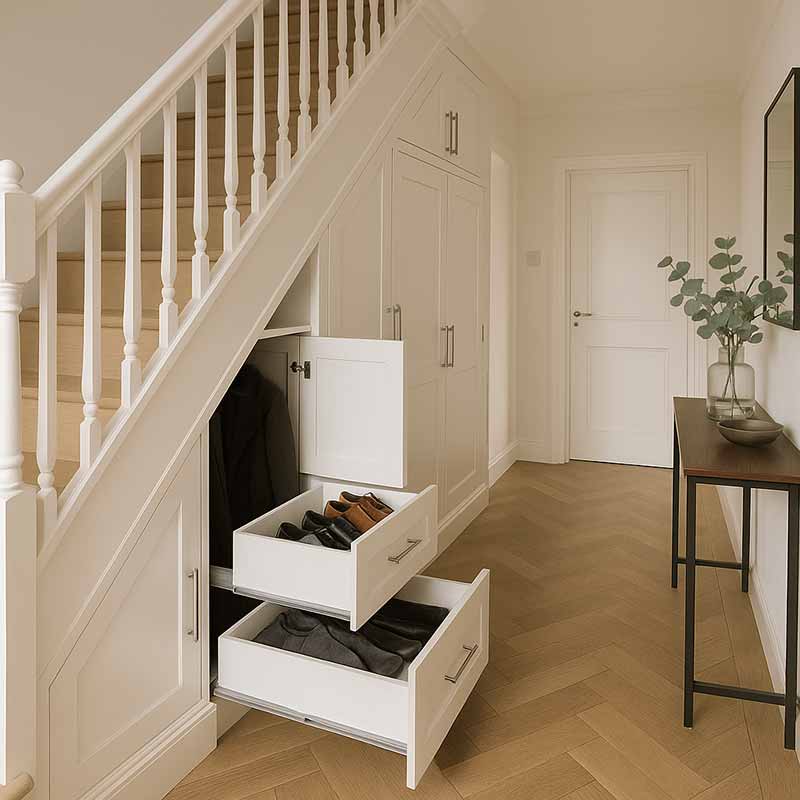
- Mix tall cupboards (for coats/hoover), shallow drawers (for shoes), and a narrow pull-out for umbrellas.
- If there’s a loo beneath, add over-cistern shelves and a slim vanity with drawers.
3) Window seats with storage
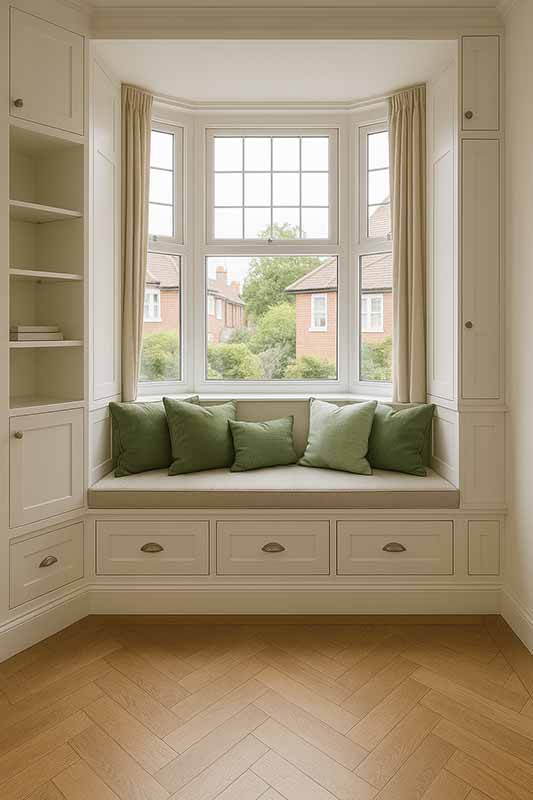
- A bench seat with a hinged or drawer base gives you deep, easy storage and extra seating.
- In a bay window, follow the curve with a segmented top to access each cavity.
4) Wall-to-ceiling wardrobes
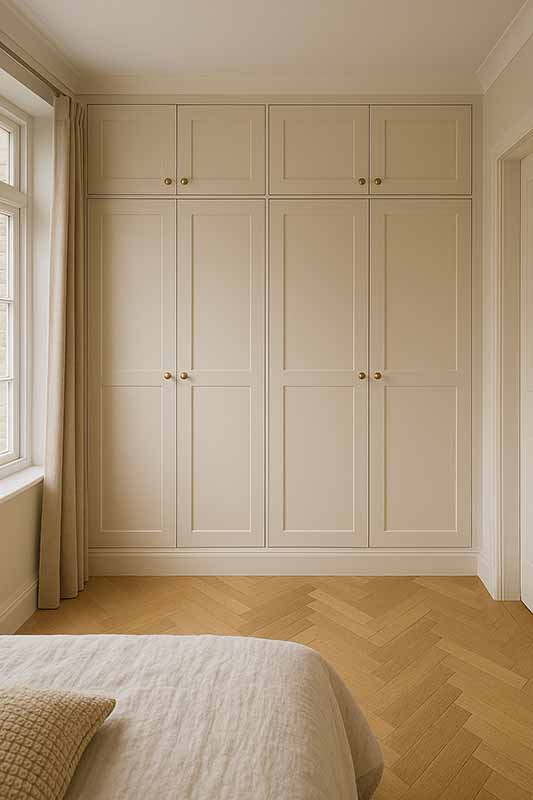
- Take wardrobes to the ceiling with top boxes for seasonal items.
- Choose sliding or pocket doors in tight rooms; mirrored fronts add light and depth.
Designer tip: Keep plinths minimal (c. 50–70 mm) and push skirting onto the joinery fronts for a built-in look.
Multi-functional furniture that works twice as hard
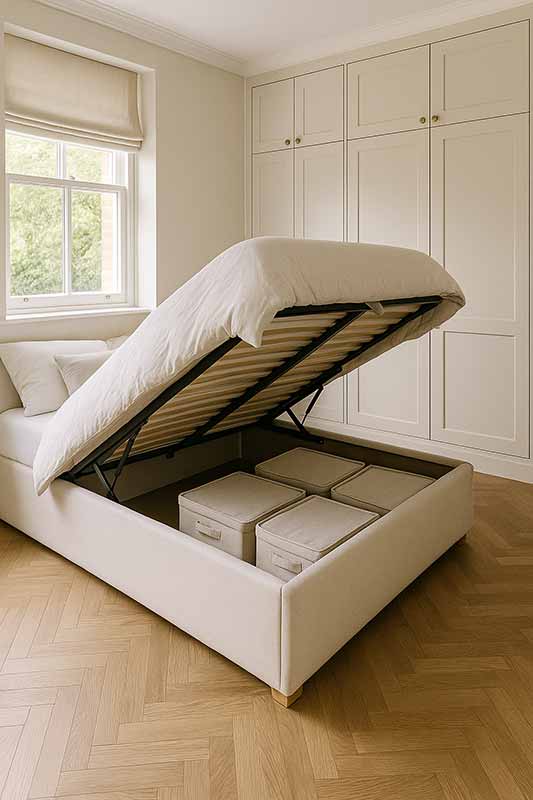
- Lift-up ottoman beds: the single biggest storage gain in a small bedroom.
- Storage footstools/coffee tables: hides throws, games, or kids’ toys.
- Drop-leaf dining tables: fold down for everyday; open for guests.
- Sofa with lined under-seat drawers: perfect for spare bedding in studio flats.
- Console-desk hybrids: 300–400 mm deep “landing strip” that becomes a laptop desk.
Vertical thinking: go up the walls
- High-level shelves above doors and along corridors for books and archive boxes.
- Pegboard walls in utility/kitchen/home office: endlessly reconfigurable.
- Ceiling-mounted pot or drying racks in galley kitchens; free up cupboards.
- Back-of-door organisers (bedroom, bath, utility) for shoes, cleaning, hair tools.
Room-by-room solutions
Hallway
- Slim console (max 300–350 mm deep) with drawers for keys/post.
- Tall, closed shoe cabinet (front-opening or tilt) keeps the space tidy.
- Add a wall rail with hooks and an umbrella stand; baskets above for hats/gloves.
Read more: Hallway ideas from an interior designer
Living room
- Low, wall-hung media unit (keeps floor visible = room feels larger).
- Built-ins around a doorway or the TV wall; use doors for kit, open cubes for books.
- Nesting side tables; a lidded ottoman for throws, cushions, kids’ toys.
Kitchen (small but mighty)
- Swap some shelves for full-extension drawers: you’ll use the entire depth.
- Fit a pull-out larder (300–400 mm wide) beside the fridge.
- Use vertical dividers for chopping boards and trays.
- Magnetic knife rail and a rail with S-hooks to free drawer space.
- Inside-door racks for spices/foil (check hinge clearances).
Bedroom
- Headboard wall with integrated niches (phone, book, glass of water) = no bedside tables.
- Under-bed: lidded boxes or lift-up ottoman; label the long edges.
- Wardrobe internals: double-hang short items; add drawers for knits; pull-out shoe trays.
Bathroom
- Shallow mirrored cabinets (100–150 mm) above basin = masses of hidden storage.
- Recessed niches in the shower (tile a slight fall for drainage).
- Tall, narrow linen cupboard; baskets for category sorting (towels, loo roll, cleaning).
Read More: 5 Essential Tips for Designing a Small Bathroom
Home office / study corner
- Wall-mounted desk (fold-down “secretary”) and a slim pedestal on castors.
- Shelves to the ceiling; magazine files and boxes to keep paper visual noise low.
- Cable tray under the desk; label chargers in a small drawer.
Wardrobe Internals: a quick cheat sheet
- Double hang (tops/skirts): rails at 950–1,000 mm + 950–1,000 mm above.
- Long hang (dresses/coats): 1,600–1,700 mm clear.
- Shelves for knits: 300–350 mm apart; 350–450 mm deep.
- Drawers: 120–180 mm internal for tees/underwear; 220–260 mm for knits.
- Shoes: pull-out trays at 90–120 mm spacing; boots at 450–500 mm.
Fixings & Safety (so shelves don’t sag)
- Identify wall type: solid masonry or plasterboard on studs.
- Masonry: brown/grey plugs + suitable screws.
- Stud walls: fix into studs where possible; use rated cavity fixings for light loads only.
- Bracket spacing: every 600–800 mm on timber shelves; keep spans modest to prevent bowing.
- Always check appliance ventilation in enclosed joinery and never block boiler clearances.
Moisture, Materials & Ventilation
- In bathrooms/bedrooms, use MR MDF or ply with sealed edges; avoid raw chipboard.
- Leave 10–20 mm air gap behind full-height units; consider discreet vent grilles in plinths or end panels.
- Add a PIR-sensor LED inside cupboards—useful and reduces door-open time (less steam ingress).
Laundry/Utility in a Cupboard
- Stack washer over pull-out laundry baskets; shelf for detergent; narrow pull-out for ironing board.
- A rail on the underside of a shelf for drip-dry shirts; collapsible drying rack on the door back.
- Keep a shallow “grab-tray” at hand height for pegs, mesh bags, lint roller.
Bikes, Prams & Hobbies (small-space friendly)
- Vertical bike hooks behind a curtain panel or inside a tall cupboard (check load rating).
- Sideways coat rail (30–35 cm deep) for narrow cupboards; pram folds under a bench seat.
- Use shallow boxes labelled by hobby (sewing, tools, art) and store on the top shelf of a wardrobe.
For Period Homes: Built-in but sympathetic
- Scribe new joinery to existing skirting/cornices; keep door stile proportions slim.
- Choose painted fronts in the wall colour so storage reads as architecture, not furniture.
- Use push-to-open in very tight spots to avoid handle clashes with architraves.
Read More: The Use of of Colour in Interior Design
Rental-friendly storage upgrades
- Freestanding systems (think modular cubes or ladder shelves) you can re-use in the next home.
- Command hooks and rails; no drilling required if you’re careful with weight limits.
- Collapsible crates and fabric boxes for wardrobes and under-bed.
- A small, wheeled kitchen trolley adds worktop + storage without fixing to walls.
Make it look considered (not cluttered)
- One palette: store in boxes/baskets that match your room’s wood/tone for visual calm.
- Consistent hardware: same handle finish across joinery helps it feel intentional.
- Fronts matter: cane, ribbed glass, fabric panels, or reeded timber add texture while concealing contents.
- Lighting: a thin LED strip under shelves instantly elevates budget units.
Sustainability notes
- Choose modular systems that can be reconfigured as life changes.
- Upcycle: vintage trunks, baker’s racks, wooden fruit crates with castors.
- Avoid single-use plastic tubs; opt for recycled or natural materials.
Read next: your Sustainable Interior Design guide
Quick “storage maths” you can do today
- If it isn’t used at least once per year, reconsider keeping it.
- Aim to keep 20–30% of each cupboard empty; breathing space makes staying tidy easier.
- Label outward-facing edges so anyone in the household can put things back correctly.
Open-Shelf Styling (so it looks curated, not cluttered)
- Build small triangles with tall–medium–low items; repeat across the run.
- Keep to two materials for baskets/boxes (e.g., rattan + linen).
- Leave 20–30% negative space per shelf for visual breathing room.
Common mistakes to avoid
- Buying boxes before measuring shelves.
- Deep shelves with no pull-outs, things get lost at the back.
- Open storage for everything, use doors or baskets to reduce visual noise.
- Forgetting ventilation around appliances and the IT kit in built-ins.
- Overloading walls without proper fixings (always use wall plugs suited to the wall type).
Need a hand?
If you’d like a tailored storage plan, we can help you prioritise, design joinery, and specify products that suit your home and budget.
Explore our services: Residential Interior Design and Online Interior Design
FAQs (add as an accordion block)
What’s the most space-efficient storage for a studio?
An ottoman bed + wall-to-ceiling wardrobes with internal drawers, plus a fold-down desk.
Built-in or freestanding, which is better?
Built-ins maximise every millimetre, especially in alcoves and under stairs. Freestanding wins if you’re renting or likely to move soon.
How do I keep open shelves from looking messy?
Limit open shelves to display pieces and books. Use baskets/doors for everything else, and stick to one or two materials for containers.
How much can I store on a plasterboard wall?
Fix into studs whenever you can. For lighter items, use rated cavity fixings and keep shelf spans short. Heavy loads belong on masonry or floor-standing units.
What’s the best depth for narrow hall storage?
Aim for 300–350 mm. Use a sideways rail for coats and tilting drawers for shoes.
Can I add storage in a listed/period property?
Yes, opt for reversible, freestanding pieces or scribed, like-for-like joinery. Always check consent rules before altering fabric.