
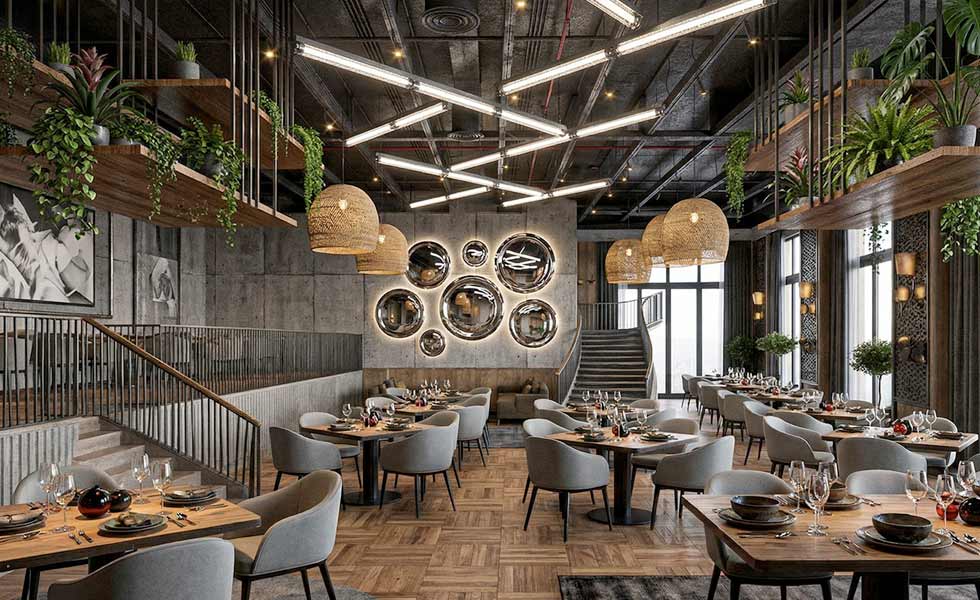
Restaurant interior design is about far more than aesthetics. A well-designed space must create a memorable atmosphere for guests while supporting the smooth, efficient running of daily operations.
From layout and lighting to materials and acoustics, every design decision influences how customers feel and how staff perform. Striking the right balance between atmosphere and function is what transforms a restaurant from simply “nice” to genuinely successful.
In a competitive hospitality market, interior design can often be the deciding factor in whether a customer chooses to return. Beyond food and service, the environment plays a crucial role in shaping perception, influencing mood, and creating a lasting impression.
For restaurant owners, professional commercial interior design services bring together layout, atmosphere, and operational flow in a cohesive and considered way.
Why restaurant interior design matters
The design of a restaurant directly impacts three key areas:
- Customer experience, including how comfortable and relaxed guests feel
- Brand perception, including how the space communicates identity and quality
- Operational efficiency, including how easily staff can move and work
A beautifully designed restaurant that fails functionally will quickly create frustration. Equally, a highly practical space without atmosphere may struggle to attract or retain customers.
The goal is always to design with both in mind from the outset.
An experienced interior designer London will consider both the guest experience and the practical demands behind the scenes, ensuring the space works effortlessly on every level.
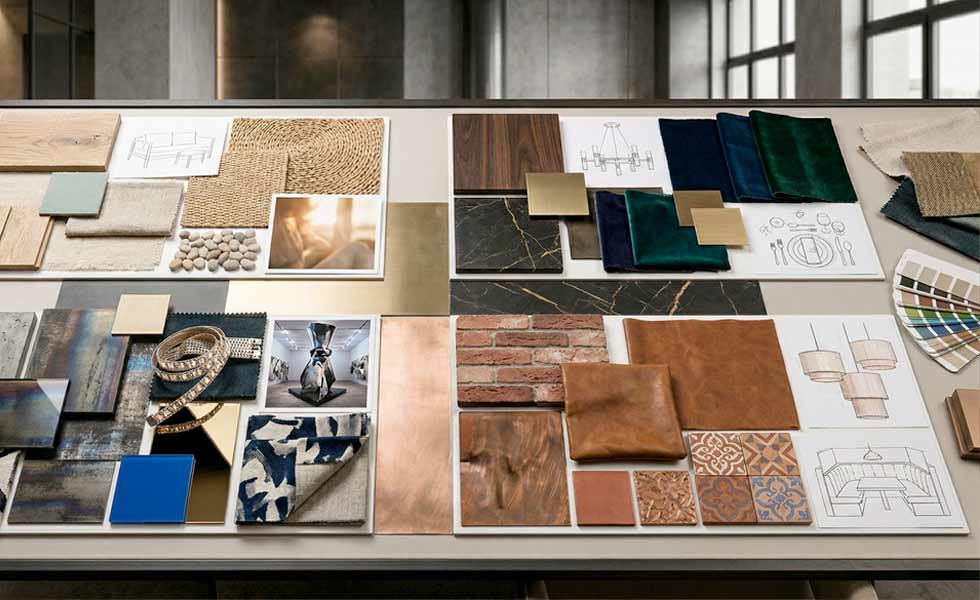
1. Defining the concept and atmosphere
Every successful restaurant begins with a clear concept. This might be:
- Relaxed and informal
- Refined and elegant
- Bold and experiential
- Warm and neighbourhood-focused
The interior should reflect this identity consistently through:
- Colour palette
- Materials and finishes
- Furniture selection
- Lighting design
For example, a contemporary restaurant may favour clean lines, muted tones, and minimal detailing, while a more intimate dining space might incorporate layered textures, softer lighting, and warmer materials.
Consistency is key. Guests should immediately understand the type of experience they are about to have.
2. Planning an efficient layout
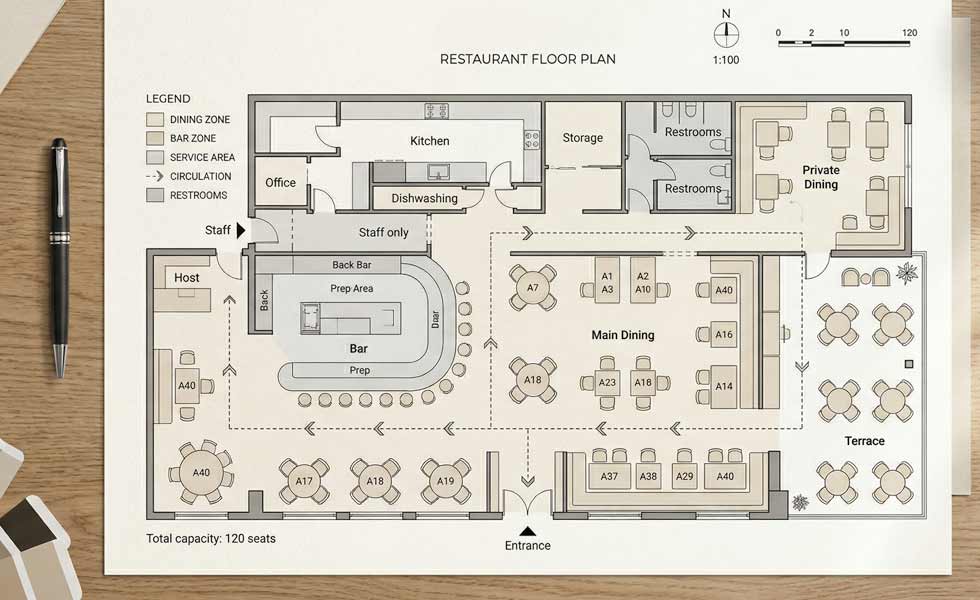
Layout is one of the most critical aspects of restaurant interior design.
A well-considered plan ensures:
- Smooth staff circulation
- Clear customer pathways
- Optimal table spacing
- Efficient kitchen access
Key zones to consider include:
- Entrance and waiting area
- Dining space
- Bar if applicable
- Service routes
- Kitchen connection points
Poor layout can lead to congestion, slow service, and an uncomfortable dining experience.
A thoughtful layout, on the other hand, feels effortless even when the restaurant is busy.
Well-designed layouts also consider how the space adapts over time. Restaurants often need to accommodate different group sizes, peak service periods, and evolving operational needs.
Flexible solutions such as:
- Modular seating
- Movable tables
- Adaptable zoning
allow the space to shift without compromising the overall design.
Accessibility should always be a priority, ensuring all guests can move comfortably through the space.
3. Lighting: Setting the mood
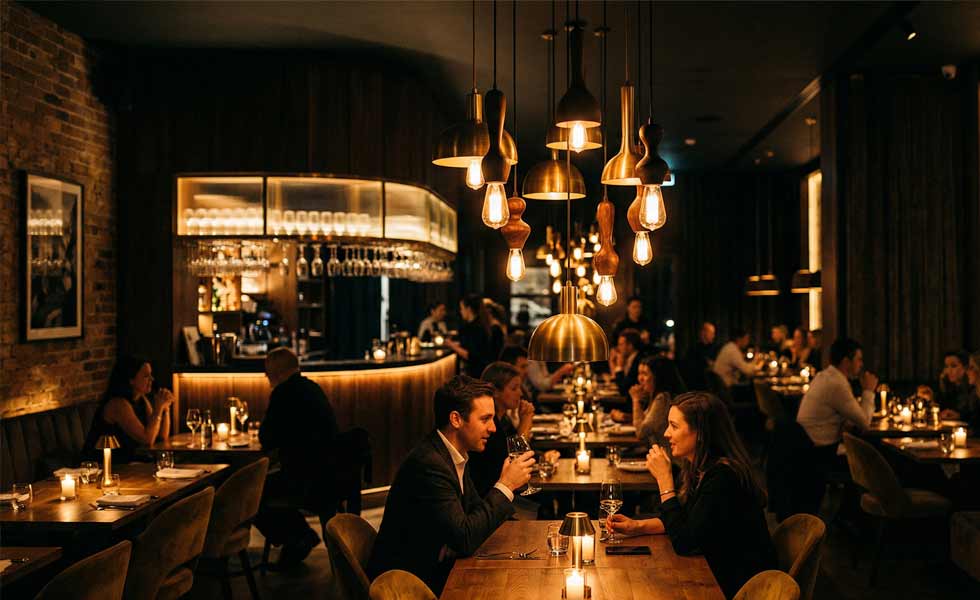
Lighting plays a defining role in shaping the atmosphere.
A layered lighting scheme typically works best, combining:
- Ambient lighting for overall illumination
- Task lighting for tables and service areas
- Accent lighting to highlight features or architectural details
For example:
- Softer, warmer lighting creates intimacy
- Brighter lighting suits casual or daytime dining
- Feature pendants can act as focal points
Lighting should also adapt where possible from day to evening to maintain the right ambience throughout service.
Lighting should also be considered in relation to materials and colour palettes within the space. Reflective surfaces, darker tones, and textured finishes all interact differently with light.
For example:
- Darker interiors may require more layered lighting to avoid feeling flat
- Natural materials like timber can soften artificial light
- Statement fixtures can act as both functional and decorative elements
Careful coordination between lighting and material selection helps create a cohesive and well-balanced environment.
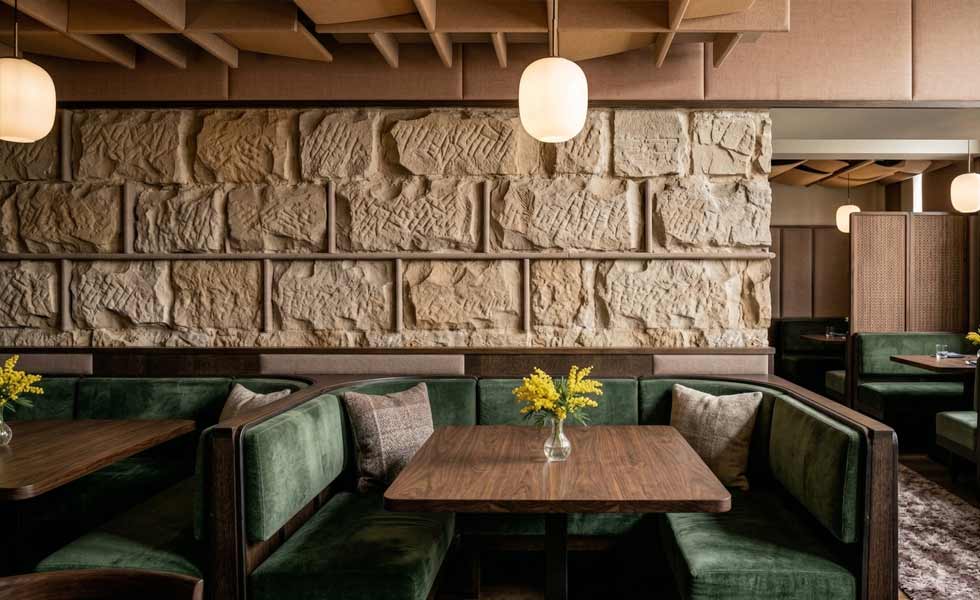
4. Choosing durable and stylish materials
Restaurant interiors must withstand constant use, so material selection is crucial. Surfaces should be:
- Durable
- Easy to clean
- Resistant to wear
At the same time, they must contribute to the overall design aesthetic. Popular choices include:
- Timber for warmth
- Stone or composite surfaces for durability
- Upholstered seating for comfort
- Metal accents for contrast and structure
The key is balancing practicality with visual appeal. Materials should feel considered, not purely functional.
Sustainability is also becoming an increasingly important consideration in restaurant design. Many businesses are now prioritising responsibly sourced materials, recycled finishes, and long-lasting products that reduce the need for frequent replacement.
This not only supports environmental goals but can also enhance the overall brand story, particularly for restaurants focused on conscious dining or locally sourced ingredients.
Choosing materials that age well over time ensures the space continues to feel considered rather than worn.
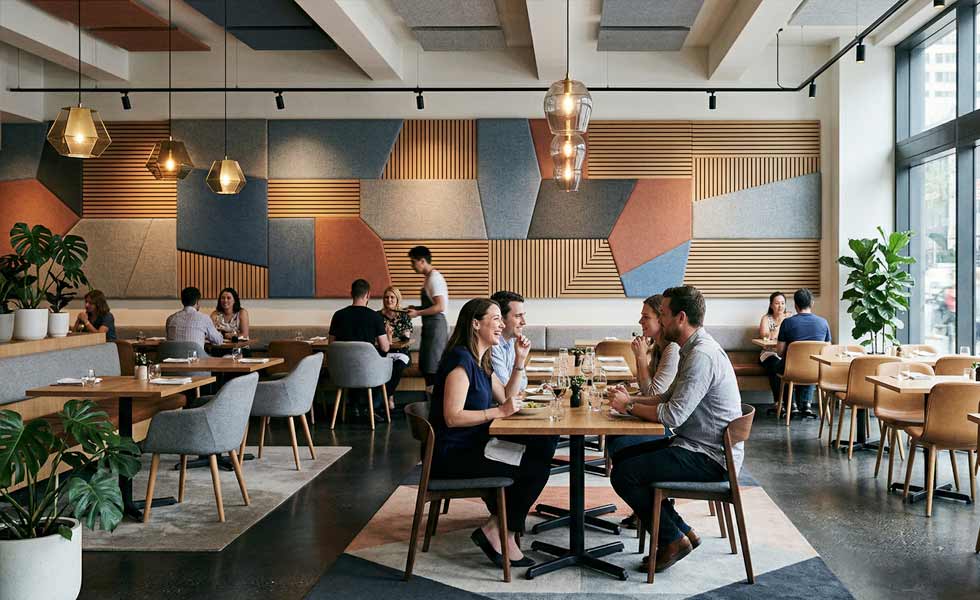
5. Acoustic comfort and ambience
Sound is often overlooked, yet it has a significant impact on the dining experience.
A space that is too loud can feel overwhelming, while one that is too quiet may lack energy. Acoustic design can be improved through:
- Upholstered seating
- Soft furnishings
- Acoustic panels
- Strategic layout planning
These elements help absorb sound and create a more comfortable environment for conversation.
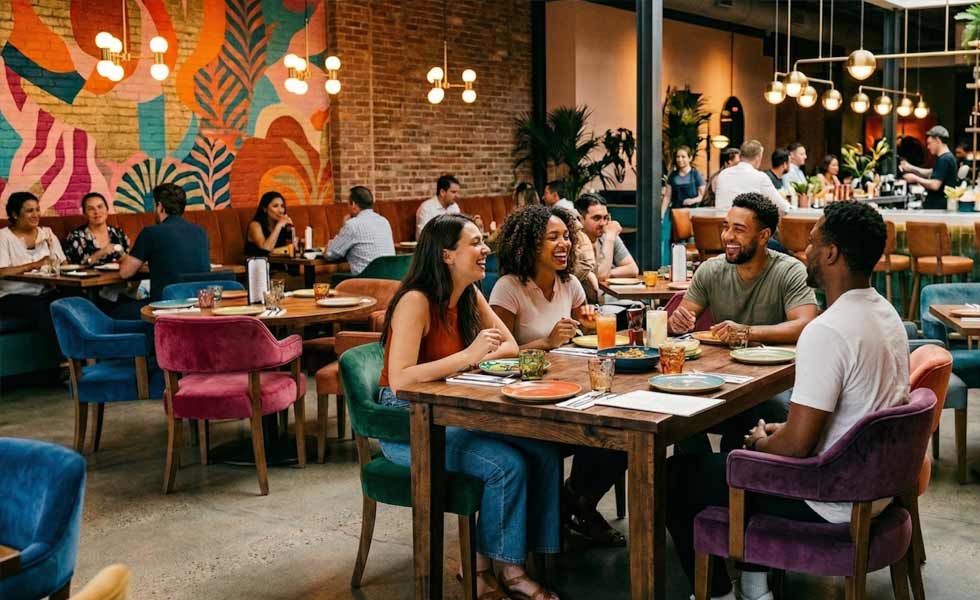
6. Furniture selection and comfort
Furniture should reflect both the style and function of the restaurant. Consider:
- Table sizes and flexibility
- Chair comfort for longer sittings
- Durability under frequent use
- Spacing for accessibility
A beautifully styled chair that is uncomfortable will negatively affect the overall experience. Comfort should never be compromised for aesthetics.
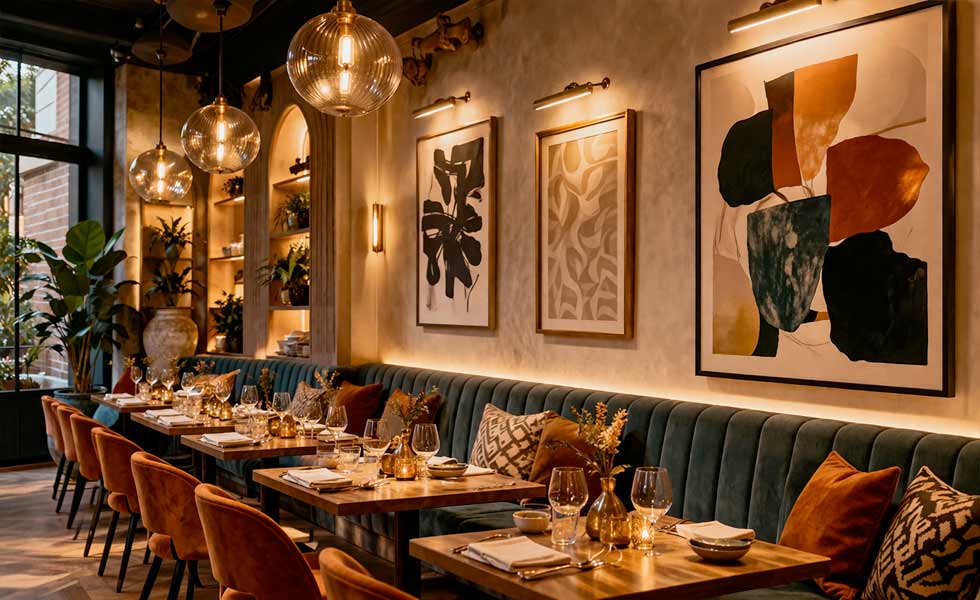
7. Creating a memorable customer experience
Beyond the basics, it is often the smaller details that elevate a restaurant interior. These might include:
- Statement lighting installations
- Feature walls or artwork
- Curated table settings
- Subtle branding elements
These touches help create a space that feels distinctive and memorable, encouraging repeat visits and word of mouth recommendations.
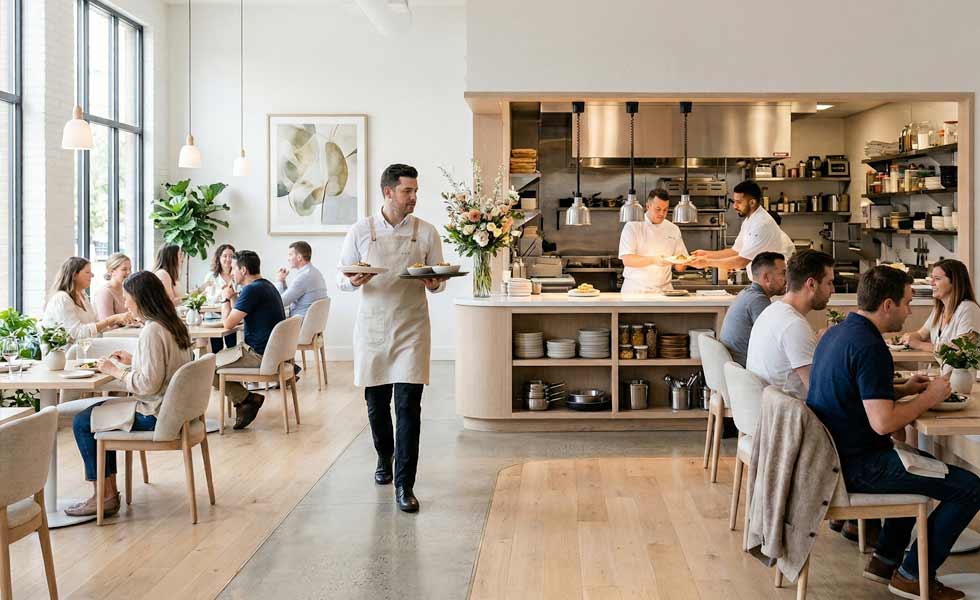
8. Balancing front of house and back of house needs
One of the biggest challenges in restaurant interior design is balancing guest-facing spaces with operational requirements. The design must support:
- Efficient service routes
- Discreet storage solutions
- Seamless communication between kitchen and floor
When these elements are integrated well, the result is a restaurant that not only looks good but functions effortlessly behind the scenes.
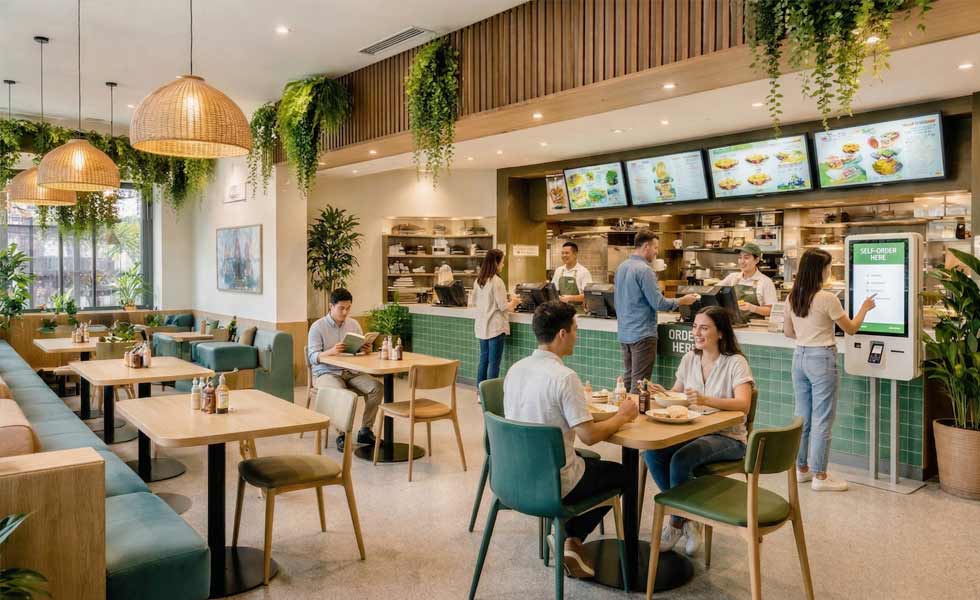
9. Designing for different types of restaurants
Not all restaurants function in the same way, and the interior design should always reflect the type of dining experience being offered.
For example:
- Fine dining restaurants often prioritise intimacy, spacing, and atmosphere. Layouts are more generous, lighting is softer, and materials tend to feel more refined and tactile.
- Casual dining spaces focus on flexibility and durability. Furniture may be more adaptable, layouts slightly denser, and finishes chosen for ease of maintenance.
- Fast casual or takeaway focused venues require highly efficient layouts with clear customer flow, quick ordering points, and minimal congestion.
Understanding these differences early in the design process ensures the space supports both the brand and the operational model effectively.
Bringing it all together
Successful restaurant interior design is always a balance.
It is about creating a space that feels inviting, reflects a clear identity, and enhances the overall dining experience while also supporting the practical demands of a busy hospitality environment.
When atmosphere and function are considered together from the outset, the result is a restaurant that not only looks beautiful but works seamlessly for both guests and staff.
Speaking of Interiors
Your London Interior Designer